
Aggregate Impact Value
- home
- Civil Engineering
- Cement & Concrete Testing Equipment
- Aggregate Impact Value
Aggregate Impact Value
Short Discription :
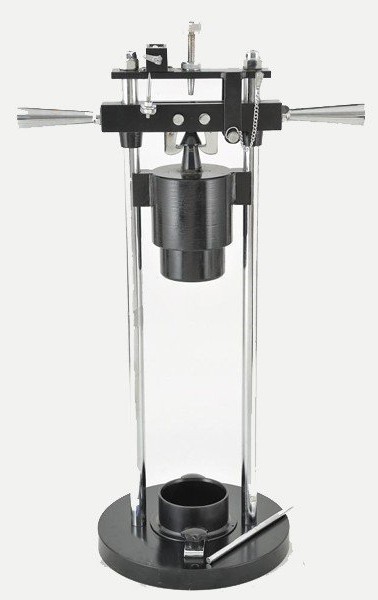
Is a standard piece of laboratory equipment used in civil engineering and materials testing to evaluate the toughness and impact resistance of coarse aggregates. This test helps determine the suitability of aggregates for use in concrete, road construction, and other applications where aggregates must withstand sudden impacts without excessive breakage
Standard Following :
IS 2386 (PART IV) 9377 BS 812-112
Brochure:
Model | Component/Feature | Component/Feature |
BE 49-01 | Overall Design | Sturdy, rigid framework consisting of a heavy base and support columns. This ensures stability during operation and minimizes vibrations. |
BE 49-02 | Hammer | Includes a cylindrical steel hammer (typically 13.5–14 kg) with a quick-release trigger mechanism for precise control. The hammer features a locking arrangement to secure it in position before release. |
BE 49-03 | Free Fall Adjustment | Adjustable height for the hammer’s free fall of 380 ± 5 mm, allowing for consistent impact energy delivery as per IS standards. |
BE 49-04 | Test Cylinder | Accommodates a metal measure (75 mm diameter, 50 mm depth) filled with aggregates for tamping and impact application. |
BE 49-05 | Temping Rod | Often includes a tamping rod (16 mm diameter, 45–60 cm long), |
Nothing To Show
Nothing To Show